Shopping for the best tennis shoes in 2026? Skip the marketing hype. What actually matters is simpler than brands want you to think: your feet, your court, and how often you play. We read what real players say: forum threads, YouTube reviews, retailer ratings, playtester notes, and boiled it all down to 14 shoes worth your money. Budget picks are in here. So are tour-level workhorses. And no, we won’t pretend we personally play-tested every pair for six months. What you’ll find below is honest community feedback plus the specs that matter. Including the complaints.
How we built this guide (methodology)
Let’s be straight about how these 14 shoes were picked: we don’t claim to have personally play-tested every pair for months, which wouldn’t be honest. What we did instead is read what real players actually say. We went through owner discussions on Reddit and tennis forums like Talk Tennis, YouTube review channels (including Foot Doctor Zach, Tennis Warehouse and Rackets & Runners), retailer review sections, playtester notes, and lab measurements where available (e.g. RunRepeat). We lined up what kept coming up, the praise and the complaints, and picked the 14 pairs the tennis community trusts most. Where feedback was thin or missing for a model, we say so in its review instead of inventing it. Tech and specs come from the manufacturers, and the list is refreshed for 2026: discontinued models were replaced with current equivalents.
Our 14 top picks at a glance
In a hurry? Start here, then read the detailed reviews below:
- Best overall: ASICS Gel-Resolution 9: the safest pick for most players
- Best budget: adidas Gamecourt 3: honest budget pick for casual players
- Best value all-rounder: ASICS Gel-Challenger 15: near-flagship feel, mid price
- Best arch support: Wilson Rush Pro 4.5: flat feet, take note
- Most durable: adidas Barricade 13: built for heavy hitters (6-month outsole warranty)
- Best for speed: adidas Adizero Ubersonic 5: light, low, fast
- Best for wide feet: New Balance Fresh Foam X 1007: runs very wide
- Best cushioned: New Balance CT Rally 2: easiest on joints
- Best for clay: ASICS Gel-Challenger 15 Clay: full herringbone outsole
- Best women’s value: Wilson Rush Pro Ace: comfort-first value pick for women
Comparison table: all 14 shoes
Fit notes come from owner feedback and playtester data. Use them before you order.
| Image | Shoe | Best for | Fit notes | Price |
|---|---|---|---|---|
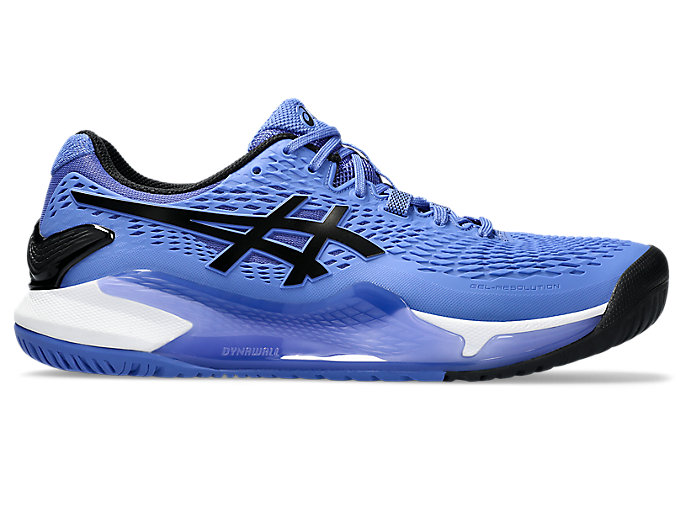 | ASICS Gel-Resolution 9 | Best overall: stability + comfort | True to size; snug standard width (2E exists); ~4-day break-in | Check Price → |
 | adidas Gamecourt 3 | Best budget | True to size; medium width; no break-in | Check Price → |
 | ASICS Gel-Challenger 15 | Best value all-rounder | Slightly long; medium width; slight break-in | Check Price → |
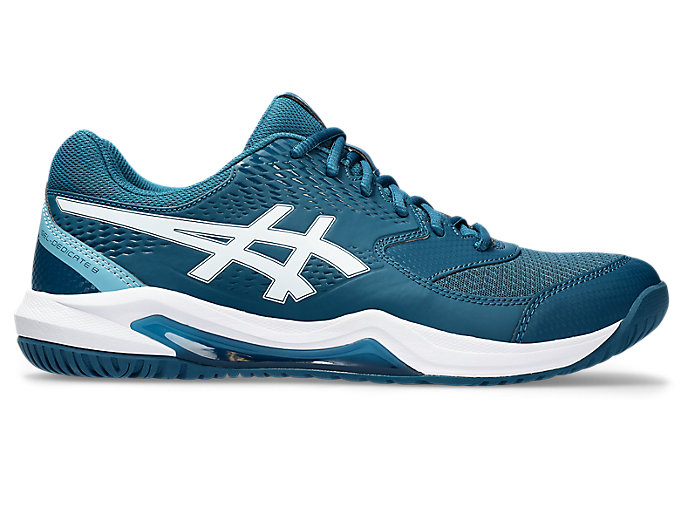 | ASICS Gel-Dedicate 8 | Best value cushioning | True to size; wide widths available | Check Price → |
 | New Balance Fresh Foam X 1007 | Best for wide feet | Runs VERY wide, 2E wearers often drop to D | Check Price → |
 | adidas Barricade 13 | Most durable | Some say runs big; 1–2 week break-in | Check Price → |
 | New Balance 696v4 | Best lightweight value | Mixed reports; order with free returns | Check Price → |
 | Wilson Rush Pro 4.5 | Best arch support | True to size; narrow heels: use runner’s knot | Check Price → |
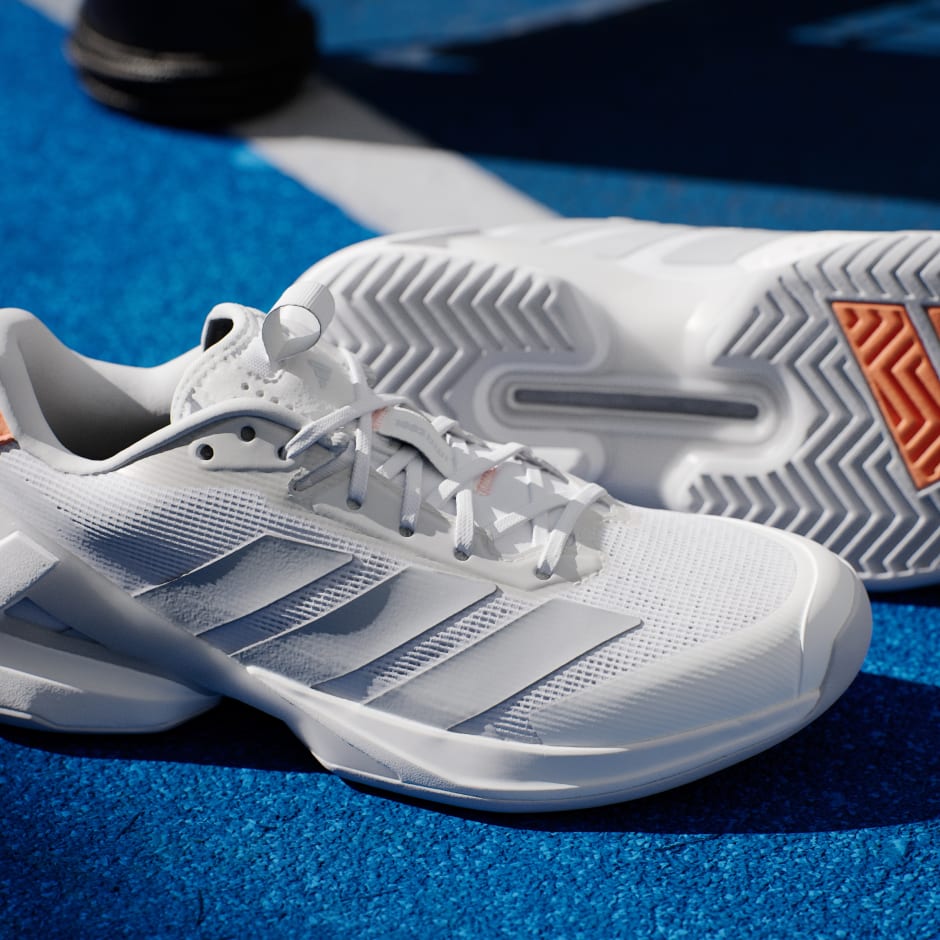 | adidas Adizero Ubersonic 5 | Best for speed | Sizing split; half size up for many | Check Price → |
 | ASICS Solution Speed FF 3 | Best for fast all-court play | Runs a touch small/tight | Check Price → |
 | Mizuno Wave Enforce Tour 2 | Best stability/durability blend | Slightly snug; half size up | Check Price → |
 | New Balance CT Rally 2 | Best cushioned / joint-friendly | True to size; closer fit than v1 | Check Price → |
 | ASICS Gel-Challenger 15 Clay | Best for clay courts | Slightly long; medium width | Check Price → |
 | Wilson Rush Pro Ace | Best women’s value | True to size; generous forefoot | Check Price → |
Prices change often. The link shows the current price.
The 14 best tennis shoes in 2026: detailed reviews
Every review below pairs the shoe’s key tech with what owners and playtesters actually report, complaints included. And if a shoe isn’t right for you, we’ll tell you straight.
1. ASICS Gel-Resolution 9: Best overall
If tennis forums had a default answer, this would be it. The Gel-Resolution 9 packs rearfoot and forefoot GEL cushioning, a DYNAWALL sidewall that wraps your midfoot on lateral moves, DYNAWRAP lacing support, PGUARD toe protection and an AHARPLUS outsole that shrugs off hard courts. It’s the shoe most players can buy blind and end up happy with.
- Pros: elite mix of stability and comfort; outstanding hard-court outsole durability; the wide (2E) version actually fits
- Cons: not a light speed shoe; stock laces run short for double-knotting; standard width feels snug on wider feet
What players say: Talk Tennis keeps coming back to two things — comfort and locked-in stability. Multiple long-term owners call it the best tennis shoe they’ve tried. One guy rotates three pairs because they “hold up incredibly well.” The outsole life on hard courts gets singled out as some of the best you can buy. On YouTube, Foot Doctor Zach’s Dremel abrasion test barely marked the buttery urethane upper. Tennis Warehouse playtesters say the DYNAWRAP system keeps your foot planted on hard direction changes, with traction that grips but still gives a little. And here’s a telling pattern: when the Gel-Resolution X launched with fit complaints, a wave of buyers went straight back to the 9.
Video review: The Tennis Mentor: ASICS Gel Resolution 9 vs Court FF 3 (comparison)
Who should skip it: pure speed players who want the lightest shoe possible. And very wide feet, unless you order the 2E width.
Sizing: runs true to size. Give it about 4 days of break-in before it feels like a glove. If your feet run wide, cross-shop the adidas Barricade 13.
2. adidas Gamecourt 3: Best budget
That’s the Gamecourt 3’s whole pitch, and it’s an honest one. You get Lightmotion foam underfoot, re-engineered Adiwear rubber and a modified herringbone pattern that works on most court surfaces. Tennis Warehouse fit data shows true length, medium width, no break-in needed.
- Pros: very light and breathable; good court feel for the money; true to size (unlike the small-running Gamecourt 2)
- Cons: minimal arch support; basic cushioning; the outsole won’t survive frequent players
What players say: Owners call it “snappy” rather than plush, light underfoot with decent grip. One Talk Tennis player mentions the satisfying chirp it makes on hard courts. A 3.5-level player uses it as a budget rotation shoe and wears through a pair in about 3 months of regular play. Fair enough at this price. Retailer ratings are positive but thin (DSW 5/5 on a single review; Zalora 4.4/5, noting true sizing). We couldn’t find a dedicated YouTube review for the Gamecourt 3, so treat it as a simple, honest recreational shoe, not some hidden gem.
Who should skip it: anyone playing 3+ times a week. Overpronators who need real support. Players with foot pain: the cushioning isn’t built for that.
Fit: true to size. If you need arch support, budget for aftermarket insoles. The stock insole is basic.
3. ASICS Gel-Challenger 15: Best value all-rounder
Think of the Gel-Challenger 15 as the Gel-Resolution’s younger sibling. WINGWALL lateral support, rearfoot GEL, PGUARD toe guard, AHARPLUS outsole rubber, OrthoLite sockliner, flagship DNA at a mid-range price.
- Pros: stable yet nimble, not clunky; comfortable with barely any break-in; doesn’t run hot
- Cons: long-term durability still unproven; heavy sliders report upper wear
What players say: One detailed Talk Tennis owner review says it all. After trying pricier flagships, the reviewer calls the GC15 his favorite: “very stable and comfortable yet nimble, not clunky like some others.” Tennis Warehouse buyer reviews sit at 5/5, with one calling it “a really good alternative to the Gel-Resolution if you liked the 9.” Multiple owners mention it doesn’t run hot, which is rare among current stability shoes.
Who should skip it: aggressive toe-draggers and heavy sliders: the upper’s long-term durability is the open question here. If you want maximum everything, get the Resolution 9.
Sizing: slightly long, medium width, low-ish arch. Expect a short break-in.
4. ASICS Gel-Dedicate 8: Best value cushioning
GEL cushioning for shock absorption. A TRUSSTIC midfoot shank for real lateral stability. Durable synthetic-leather toe overlays. The Dedicate 8 packs genuine tennis-shoe engineering at one of the lowest prices on this list, and wide widths are available.
- Pros: real GEL cushioning and lateral support for the money; durable toe area; wide option exists
- Cons: upper and sockliner feel plain; standard width runs narrow in the forefoot; cushioning fades with heavy use
What players say: The most revealing feedback comes from a Talk Tennis user who tried both the Dedicate 8 and the pricier Solution Speed FF 3, and could “barely distinguish fit and cushioning” between them. He returned the FF3 and kept the Dedicate 8 for the lower cost and weight. The honest caveat from that same thread: after three hard sets, his feet felt tender on the bottoms. A long-term pickleball player (9 months, 1–2x a week) reported the cushioning faded and the forefoot sole wore down significantly.
Who should skip it: frequent players (4+ days a week). The cushioning won’t keep up: that’s a durability limit, not a defect, at this price.
Sizing: mostly true to size, but the forefoot runs narrow. Wide-footers should take the wide version.
5. New Balance Fresh Foam X 1007: Best for wide feet
When standard widths pinch, this is the first shoe to try. Fresh Foam X cushioning, NDurance rubber in the high-wear zones, and one of the roomiest fits in tennis. It also swallows custom orthotics happily, which matters more than most buyers realize.
- Pros: exceptionally roomy; plush Fresh Foam X is easy on feet and joints; orthotic-friendly
- Cons: toe box tapers despite the width; not the most stable at full sprint; runs almost too wide for average feet
What players say: A detailed Talk Tennis width thread is gold here. The 1007 runs VERY wide: a 2E wearer in other New Balance models drops to D in the 1007, another goes 4E. But there’s a nuance: the toe box still tapers, so one poster calls it “wide in the wrong ways” for toe splay and rates the Babolat SFX anatomically better for wide feet. What owners keep repeating as strengths: plush cushioning for long or back-to-back sessions, and easy orthotic fit.
Who should skip it: narrow or even average-width feet, you’ll swim in it. Size down a width from your normal New Balance size.
Sizing: length runs true, but size DOWN in width (2E wearers: try D first).
6. adidas Barricade 13: Most durable
The Barricade is tennis’s durability legend, and the 13 keeps the formula going: Adiwear outsole, Geofit construction, improved Repetitor+ cushioning, plus a 6-month outsole durability guarantee. It’s heavier than a speed shoe. But for hard-court grinders, it’s the benchmark.
- Pros: outstanding stability and support; 6-month outsole warranty; lighter and quicker than older Barricades
- Cons: real 1–2 week break-in; some heel slippage and toe jamming reports; feels “a touch sluggish” next to speed models
What players say: Talk Tennis durability threads give hard numbers. A daily 2-hour hard-court player wears through 13s in roughly 40 hours. Another calls the 13’s soles “the softest, thinnest Barricade soles I have ever seen” compared to the 2/5/6/12. But Tennis Warehouse’s women’s playtest scored sole durability 9.0–9.5 (“best durability category, no doubt”) with barely any wear after 20+ hours. The honest read: durability is excellent for most players, merely good for extreme daily grinders. Wider-footed players rate its comfort and stability above the Gel-Resolution 9, and a rubberized tread wrap protects against toe drag. Half the TW test team needed 1–2 weeks of break-in, with some ankle rubbing early on.
Who should skip it: speed-first players (get the Ubersonic 5). And anyone who won’t tolerate a real break-in period.
Sizing: some owners say it runs big; women’s versions run narrow for men. If your feet are narrow-to-average, cross-shop the Gel-Resolution 9.
7. New Balance 696v4: Best lightweight value
Around 9 oz per shoe. NDurance rubber in the high-wear zones. A film drag guard over the toe. The 696v4 is the lightest budget path to a real tennis shoe: non-marking outsole, clean looks, honest price.
- Pros: very light; good value; toe drag guard for sliders
- Cons: mesh upper is less protective than structured toe boxes; cushioning is firm, not plush; sizing feedback is mixed
What players say: A 2026 gear guide names it “best value” for the weight-to-price ratio. On Talk Tennis, one owner buys 696s in batches on sale as a value rotation shoe and stays “fairly happy.” Retailer reviews are genuinely mixed on fit: one wide-footed SportChek buyer found it “too short and not wide enough (even in wide),” another found it “too big in the toe area.” There’s no firm sizing consensus, so use free returns. One note: chatter about the newer v5 feeling less comfortable doesn’t apply to this v4, but it does flag line-consistency questions.
Who should skip it: players wanting plush cushioning. And heavy toe-draggers, the mesh upper won’t protect like a wrapped toe cap.
Sizing: no consensus. Try it with a free-returns retailer.
8. Wilson Rush Pro 4.5: Best arch support
Wilson’s 4D Support Chassis resists twisting on hard cuts. A TPU plate adds propulsion. The Duralast outsole carries a 6-month durability guarantee. But the real story here is the arch support, the best in this lineup for flat feet.
- Pros: best-in-class arch support; stable yet reasonably light; durable outsole with warranty
- Cons: heel can slip on narrow heels (runner’s knot fixes it); cushioning and rebound on sharp lateral cuts isn’t elite
What players say: A 6-month Talk Tennis owner review (38 sets, 17 matches) is the standout: “best arch support I’ve had in a tennis shoe.” Near-flat feet, ball-of-foot pain eliminated. Another owner replaced his Gel-Resolution 9s with it after ASICS “reengineered the shoe in its next version — not in a good way.” On YouTube, Tennis Guy named the Rush Pro 4.5 Clay the best shoe he tested in 2024. Tennis.com notes the upgraded drag pad but warns narrower heels may get minor slippage. The runner’s knot lacing technique sorts that out. Compared directly with the Ubersonic 5, softness is on par, but the Rush Pro wins clearly on arch support.
Video review: @marksansait: Wilson Pro Rush 4.5 Tennis Shoe Review
Who should skip it: players with narrow heels who won’t bother with lock lacing. And anyone wanting maximum cushioning softness.
Sizing: pretty much true to size. Learn the runner’s knot (heel-lock lacing) if your heel slips.
9. adidas Adizero Ubersonic 5: Best for speed
Lightstrike cushioning, Adiwear outsole, Speedframe support system, minimalist speed last. The Ubersonic 5 is adidas’s answer for players who live on their toes. Miami Open champion Jakub Mensik wears it on tour — that tells you the performance ceiling.
- Pros: very light and fast feeling; harder outsole rubber lasts longer than the 4; improved heel lockdown
- Cons: firm underfoot (needs good socks to avoid blisters); polarized reception from v4 loyalists; sizing is inconsistent
What players say: A long 2025–2026 Talk Tennis thread tracking the v4-to-v5 change is revealing. The 5 fixes the 4’s real weaknesses: harder outsole rubber for hard indoor courts, better heel lockdown (the 4’s heel was soft and slippery without lock lacing), more toe material. Very stable, feels faster than the 4. But Tennis Warehouse buyer reviews are polarized at 3.2/5. One heavy user got 6 months out of them versus his usual 4 (“huge plus”), while v4 loyalists post “bulky and stiff… bring back the Ubersonic 4!” Tennis.com calls it a minimalist speed shoe that’s sturdier and more connected than the softer 4.1. The caveat owners keep repeating: the sole and insole feel hard in the ball area. Wear good socks or expect blisters, and allow about an hour of break-in.
Who should skip it: v4 lovers (try before you switch). Players needing arch support or soft cushioning. Flat feet. The Rush Pro 4.5 serves those better.
Sizing: genuinely split. Some need a half to full size up (“runs small,” “narrow”), others find a roomy toe box. Order with free returns.
10. ASICS Solution Speed FF 3: Best for fast all-court play
FlyteFoam cushioning in a light, low-to-the-ground package. The Solution Speed FF 3 trades some of the Gel-Resolution’s stability for outright quickness, the speed option for ASICS loyalists.
- Pros: light and fast feeling; secure heel hold (very stiff heel counter); fair value for a speed shoe
- Cons: stiff out of the box; runs tight; narrower forefoot isn’t ideal for aggressive lateral baseline moves; tongue slides for some
What players say: Talk Tennis owners are blunt: it’s stiff out of the box. One user’s feet hurt through the first sessions until a runner’s knot fixed the tightness — but then: “I definitely feel faster.” The value question is real, though. A buyer who tried both the FF3 and the Gel-Dedicate 8 found them nearly indistinguishable and kept the Dedicate 8 on cost and weight. Lab data (RunRepeat) backs the secure feel (5/5 heel counter stiffness, 4/5 torsional rigidity) but notes the forefoot midsole runs narrower than average. So it’s “not the best option for super aggressive lateral moves at the baseline.” The clay version earns positive clay-specific reviews for stability and slide-friendly traction.
Who should skip it: wide feet. And anyone wanting a soft cushioned ride: this is a firm, fast shoe. Budget buyers should compare the Dedicate 8 first.
Sizing: runs a touch small and tight. The clay version runs small enough that EU buyers go 1–1.5 sizes up.
11. Mizuno Wave Enforce Tour 2: Best stability/durability blend
Mizuno’s Wave plate delivers the brand’s signature stable ride, wrapped in a durability-focused build with a 6-month outsole guarantee. Tennis Express found it surprisingly lightweight and nimble for a durability shoe.
- Pros: excellent stability; strong traction (9.0 in TW playtest); 6-month outsole warranty
- Cons: v2 is less plush than v1 (v1 loyalists complain); slightly snug fit; longer break-in; mid-pack durability for daily players
What players say: Tennis Warehouse playtesters scored it 8.6 overall (comfort 9.1, traction 9.0, durability 8.4), though one tester disliked the lateral outrigger. Buyer reviews sit at 4.2/5 with a telling split: “best tennis shoes I’ve ever had” versus 2/5 reviews saying v2 “feels like ASICS Gel-Resolution now” and “if it ain’t broke, why change it.” A Talk Tennis durability ranking puts it mid-pack — a daily 2-hour player gets 6 weeks to 2 months, scoring 4–5/10 against the Barricade 8 and Nike Cage 4 at 9. Multiple playtesters went up half a size.
Video review: Rackets & Runners: Mizuno Wave Enforce Tour 2 video
Who should skip it: v1 lovers (try the 2 first; it feels different). Very wide feet. Players wanting a soft, plush ride.
Sizing: slightly snug, so half size up for most. Medium width with room for slightly wider feet.
12. New Balance Fresh Foam X CT Rally 2: Best cushioned / joint-friendly
Fresh Foam X cushioning tuned for tennis, worn on tour by Tommy Paul, with a 6-month outsole guarantee. Lab testing measured some of the highest shock absorption in the category. This is the shoe for long matches, coaching days, and anyone whose joints complain the morning after.
- Pros: superb shock absorption; Fresh Foam outlasts rivals’ foams; 6-month warranty
- Cons: tall stack (33.3mm) and steep 13.1mm drop need secure lacing to avoid toe jamming; less max stability than v1; some buyers lukewarm at full price
What players say: Talk Tennis v1-to-v2 upgraders say the 2 feels more like the 996 v5, a touch closer fit, slightly less max stability than v1’s flatter build, but comparable to the 996 v5. Minor initial heel slip resolves with break-in. The key durability note: Fresh Foam “outlasts the 996’s FuelCell,” which owners say loses its bounciness over time. On YouTube, Rackets & Runners (Jan 2026) calls it “a major redesign that trades classic stability for a more modern, adaptive, responsive ride,” and Foot Doctor Zach did a full performance review. RunRepeat’s lab numbers back the comfort story: 116 SA shock absorption at the heel (ideal for long sessions) with average energy return.
Video review: Rackets & Runners: New Balance CT-Rally V2 Review
Who should skip it: players wanting a low, connected court feel. And anyone with unstable ankles who won’t lace securely; the tall stack demands good lockdown.
Sizing: fits true to size, but closer than v1. Use the runner’s knot to prevent toe jamming on the steep drop.
13. ASICS Gel-Challenger 15 Clay: Best for clay courts
Same comfort-first GC15 platform: WINGWALL support, rearfoot GEL, OrthoLite, PGUARD, AHARPLUS, with a full herringbone clay outsole for controlled traction and sliding on crushed brick and Har-Tru. If you play mainly on clay, this is the version to get.
- Pros: full herringbone outsole grips and releases correctly on clay; comfortable with minimal break-in; great price for a clay specialist
- Cons: no dedicated owner discussion found yet; overkill if you rarely touch clay
What players say: Honest note: we couldn’t find dedicated forum, Reddit or YouTube discussion of the clay version specifically. Reading across from the standard Gel-Challenger 15 (same platform): expect the same comfort-first, minimal-break-in character. One caveat carries over: heavy sliders note upper-durability questions on the standard version, so clay sliders should keep an eye on the upper. Retailer fit data (Midwest Racquet Sports): slightly long, medium width, little to no break-in.
Who should skip it: hard-court-only players. Get the standard Gel-Challenger 15 instead and save the herringbone for clay.
Sizing: slightly long, medium width, same as the standard GC15.
14. Wilson Rush Pro Ace: Best women’s value
The Rush Pro Ace is the comfort-first sibling of the Rush Pro 4.5: same 4D Support Chassis against twisting, but comfier, slightly bouncier and a little wider. A 2026 gear guide named it best for pivot control, noting the chassis resists twisting on serve landings.
- Pros: generous forefoot fits medium-wide feet without a wide size; comfortable and bouncy; strong value
- Cons: very thin stock insole (swap it); outsole wears in ~4 months for heavy hard-court players; midsole softens within months
What players say: Talk Tennis owners frame the Pro-vs-Ace choice clearly: the Pro is faster, stiffer and closer to the ground; the Ace is comfier, slightly bouncier and a little wider: “if needing a little more cushion try the Pro Ace.” A wide-footed buyer picked it after the K-Swiss Hypercourt Express 2 proved too narrow. The most actionable feedback: the stock OrthoLite insole is very thin. Owners call swapping it “transformative.” One heads-up: Wilson renamed the line (Rush Pro Ace 4.5 → Rush Pro 5.0), which can confuse buyers comparing versions.
Who should skip it: players wanting maximum speed and stiffness, that’s the Rush Pro 4.5. Heavy daily hard-court players should budget for the shorter outsole life.
Fit: true to size. Medium-wide feet can often skip the wide size thanks to the generous forefoot.
The right shoe for your feet: fit & foot conditions
Most “best tennis shoes” lists skip the part that matters most: your feet. Here’s how the shoes above line up with common foot issues, based on what owners and playtesters actually report:
- Wide feet: start with the New Balance Fresh Foam X 1007 (runs very wide; most people size down a width), the Wilson Rush Pro Ace (generous forefoot, medium-wide feet often skip the wide size), the adidas Barricade 13, or the ASICS Gel-Resolution 9 in 2E. Look for 2E/4E width options at checkout.
- Flat feet / overpronation: the Wilson Rush Pro 4.5 has the best arch support in this lineup. One owner with near-flat feet played 6 months in them and said ball-of-foot pain disappeared. The Barricade 13’s stability works for overpronators too.
- Plantar fasciitis / heel pain: you want cushioning plus arch support: Rush Pro 4.5 or New Balance CT Rally 2 (the highest measured shock absorption here). And swap the stock insole for a supportive one. Owners call that swap “transformative” on several of these models.
- High arches / supination: cushioning matters more than motion control for you: CT Rally 2 or Fresh Foam X 1007.
- Heel slippage: try the runner’s knot (heel-lock lacing) before you return the shoe. It fixes heel slip on the Rush Pro 4.5, Solution Speed FF 3 and CT Rally 2 for most players. Usually it’s a narrow heel, not a defective shoe.
- Bunions / toe splay: you need a wide toe box that doesn’t taper. The 1007 is wide but tapers a bit, so try it carefully, and the Rush Pro Ace’s roomy forefoot is the safer bet on this list.
- Custom orthotics: the Fresh Foam X 1007 and Gamecourt 3 (thin stock insole) take orthotics well. Whatever you buy, make sure the insole is removable before you commit.
We’re not doctors — if foot pain sticks around, see a podiatrist. But matching the shoe to your foot type solves most comfort complaints before they start.
Match the shoe to your playing style
- Aggressive baseliner (long rallies, hard cuts): ASICS Gel-Resolution 9 or adidas Barricade 13. Maximum lateral stability, outsoles that last.
- Fast all-court player: adidas Adizero Ubersonic 5 or ASICS Solution Speed FF 3. Light, low, quick.
- Serve-and-volley / net rusher: same answer: light and responsive wins. Ubersonic 5 or Solution Speed FF 3.
- Doubles player / coach (long days, lots of standing): New Balance CT Rally 2 or Fresh Foam X 1007. Cushioning that still feels good in the third hour.
- Beginner / casual (1–2x per week): adidas Gamecourt 3 or ASICS Gel-Dedicate 8. Real tennis-shoe support without the flagship price.
- Clay-court regular: ASICS Gel-Challenger 15 Clay. Herringbone outsole built for sliding.
Tennis shoes for women: what to know
Women’s tennis shoes aren’t just smaller men’s shoes — they’re built on a women’s last (narrower heel, different forefoot shape). Sizing down 1.5 from your men’s size gets you close, but the fit won’t be identical. If a model you like doesn’t come in a women’s version, that’s worth knowing before you order.
On this list, the Wilson Rush Pro Ace is our women’s pick: comfort-first, a little bouncy, generous forefoot. Medium-wide feet can often skip the wide size entirely. One heads-up from owners: the stock insole is very thin, so budget for a replacement. People call the swap transformative.
A few more women’s notes from the research: Tennis Warehouse’s women’s playtest team scored the Barricade 13’s sole durability 9.0–9.5 (“best durability category, no doubt”), so it’s a strong pick if you play a lot. And if you’re choosing between the Rush Pro 4.5 and the Rush Pro Ace: the Pro is faster and stiffer, the Ace is comfier and a touch wider. Pick based on your game, not the price tag.
Want the full women’s shortlist? We built a separate guide to the best tennis shoes for women — 10 picks sorted by the foot problem they solve.
Outsole durability warranties: the 6-month guarantee, explained
Here’s something most buyers never hear about: several tennis shoes come with a 6-month outsole durability guarantee. If the outsole wears through within 6 months of purchase, the manufacturer replaces the shoe. It’s one of the strongest trust signals in tennis footwear.
On this list, confirmed with outsole warranties (via playtester and retailer sources):
- adidas Barricade 13: 6-month outsole guarantee
- Wilson Rush Pro 4.5: 6-month Duralast outsole guarantee
- Mizuno Wave Enforce Tour 2: 6-month outsole guarantee
- New Balance CT Rally 2: 6-month outsole guarantee
How to claim: keep your receipt, note the purchase date, and contact the retailer or manufacturer with photos of the worn outsole. Cosmetic scuffs don’t count. This is for outsoles worn through. Terms change, so double-check the retailer’s product page before you buy. And an honest caveat from Talk Tennis: even warranted shoes have limits. A guy playing 2 hours of hard court daily burned through Barricade 13s in about 40 hours and used the warranty. For most players at 2–4x per week, the outsole easily outlasts the 6 months.
How long do tennis shoes last? (and when to replace them)
Honest answer: count hours played, not months owned. Rough rules from coaches and playtesters:
- Competitive players (5+ days/week): 3–6 months, roughly 45–60 hours of hard-court play
- Regular players (2–4x/week): 6–9 months
- Casual players (1x/week): 9–12 months
Time for a new pair when: the tread goes smooth in the high-wear zones (you’ll feel yourself slip on hard stops), the midsole has deep creases and feels dead, the heel counter collapses when you squeeze it, or new aches show up in your knees, shins or feet.
Two habits that save money: (1) Rotate two pairs. Foam needs about 24 hours to rebound between sessions, so rotation genuinely extends their life. (2) Durability is the real value. A shoe that survives 8 months of regular play beats one that falls apart in 3. And keep one pair for tennis only, since wearing court shoes as daily walkers burns the outsole for nothing. (Keeping them clean helps too: see how to wash tennis shoes.)
Tennis shoes vs running shoes: can you play tennis in running shoes?
One of the most-asked questions online: “can you wear running shoes to play tennis?”, “are Air Force 1s tennis shoes?”, “is the Stan Smith OK for tennis?” — so let’s settle it:
- Running shoes are built for forward motion. Tennis is lateral: hard stops, slides, direction changes. Running shoes don’t have the lateral support (firm heel counter, torsional rigidity, sidewalls like DYNAWALL/WINGWALL) that keeps ankles safe on a tennis court.
- The outsoles are wrong too. Running outsoles aren’t made for abrasive hard courts or the grip-and-give balance of a herringbone pattern. They wear fast and grip unpredictably.
- Fashion sneakers (Air Force 1, Stan Smith, Air Max) are worse. Flat, unsupportive, no lateral structure. Fine for the stands, not for play.
- What about cross-trainers? They sit somewhere in between: see our tennis shoes vs cross trainers comparison.
- One casual hit in running shoes? Sure. But if you’re playing weekly, a real tennis shoe prevents rolled ankles and sore knees, and the Gamecourt 3 costs less than most running shoes anyway.
- What about pickleball? Court shoes cross over well. The Dedicate 8 and 696v4 are popular pickleball picks. Dedicated pickleball shoes exist, but a tennis shoe does the job.
Tennis shoe buying guide: what actually matters
1. Court surface first: then flip the shoe over
Court surface decides the outsole. Hard courts (acrylic, concrete) chew through soft rubber, so you want durable, thicker compounds: AHARPLUS, Adiwear, Duralast, NDurance. One thing people miss: indoor hard courts are smoother and less abrasive than outdoor ones. If you play outdoors, weight durability even higher. Clay (red clay, green Har-Tru) needs a full herringbone tread: the zigzag bites into the loose surface and releases so you can slide. Grass is rare outside clubs; nubbed outsoles work there. All-court shoes (Gamecourt 3, Gel-Dedicate 8) split the difference if you rotate surfaces. Practical tip: flip the shoe over in the store. Deep zigzag = clay. Flatter, denser pattern = hard court. A “clay” shoe with a shallow tread is a red flag. Not sure what you’re playing on? Here are the types of tennis courts.
2. Cushioning matched to how you play
Baseliners who grind through long rallies want maximum shock absorption (GEL, Fresh Foam X, Repetitor+). Your knees will thank you in five years. Serve-and-volleyers and net rushers are better off with lighter, more responsive setups (Lightstrike, FlyteFoam) where court feel beats plushness. There’s no single “best” cushioning — there’s the right cushioning for your game.
3. Stability: the parts that save your ankles
Lateral support is what separates tennis shoes from sneakers. Check three things: a firm heel counter (squeeze it; it shouldn’t collapse), torsional rigidity (twist the shoe; it should resist), and sidewall support (DYNAWALL, WINGWALL, 4D Support Chassis, Wave plate, different brand names with the same job: holding your foot over the sole on hard cuts). If you overpronate or move aggressively, weight this above cushioning.
4. Fit: the 10-minute rule
Try shoes on in the afternoon (feet swell during the day), in your tennis socks, with a thumb’s width between your longest toe and the front. Heel should lock in with no slip. Use the runner’s knot if it’s close. Walk around, then do a few lateral shuffles. Your foot shouldn’t slide over the sole edge. And know that brands fit differently: ASICS runs snug in standard widths (wide 2E available), New Balance varies by model (the 1007 runs very wide), and the Ubersonic 5 genuinely splits owner opinion on sizing. When in doubt, order from somewhere with free returns.
5. Break-in: which shoes need it, which don’t
Not every shoe needs breaking in. From owner feedback: the Barricade 13 needs a real 1–2 weeks (expect some ankle rubbing early on), the Solution Speed FF 3 feels stiff for the first few sessions, and the Wave Enforce Tour 2 breaks in slowly. The Gamecourt 3, Gel-Challenger 15 and Rush Pro 4.5 feel good pretty much day one. One rule though: never buy a shoe counting on break-in to fix a bad fit. Break-in softens stiffness. It doesn’t create length or width.
6. Insoles: the cheapest upgrade in tennis
A few shoes on this list ship with thin stock insoles. Owners call replacing them “transformative” on the Rush Pro Ace, and the Gamecourt 3’s basic insole is practically an invitation to upgrade. If you wear custom orthotics, confirm the shoe has a removable insole (the Fresh Foam X 1007 is a safe bet) and test the orthotic in the shoe before you commit.
7. Weight: lighter isn’t always better
Light shoes (Ubersonic 5, Solution Speed FF 3, 696v4) feel fast but give up cushioning and durability. Heavier shoes (Barricade 13, Gel-Resolution 9) protect and last but can feel sluggish if you’re a speed player. Most all-court players are happiest in the middle, which is exactly where the Gel-Challenger 15 and Rush Pro 4.5 sit.
8. Shoe tiers: what you give up
Entry level (Gamecourt 3): honest recreational shoes. Lighter cushioning, shorter outsole life, basic insoles. Fine for 1–2x a week. Mid-range (Dedicate 8, Gel-Challenger 15, 696v4, Rush Pro Ace): the sweet spot. Real tech, real durability, often warranties. Flagship (Resolution 9, Barricade 13, CT Rally 2): flagship stability, cushioning and materials for frequent players. Match the tier to how often you play. A flagship shoe you’ll outgrow is wasted money; an entry-level shoe you destroy in two months costs you twice.
Frequently asked questions
How do I choose the best tennis shoes for my foot type?
Start with width. If standard shoes pinch, look at the Fresh Foam X 1007, Rush Pro Ace, Barricade 13, or ASICS wide (2E) versions. Flat feet and overpronation need arch support and stability (Wilson Rush Pro 4.5, Barricade 13). High arches need cushioning (CT Rally 2, 1007). For plantar fasciitis, pair a cushioned, supportive shoe with a proper insole, and see a podiatrist if the pain doesn’t go away. Our foot-condition section above maps each issue to specific models.
Can you wear running shoes to play tennis?
For one casual hit, sure, but not regularly. Running shoes are built for forward motion and don’t have the lateral support for hard cuts and slides, so you’re risking a rolled ankle. Their outsoles also wear fast on hard courts and grip unpredictably. A budget tennis shoe like the adidas Gamecourt 3 costs less than most running shoes and is far safer.
Are Air Force 1s or Stan Smiths OK for tennis?
No. They’re fashion sneakers: flat, unsupportive, no lateral structure. Great for watching. Not for playing.
How long do tennis shoes last?
Think in hours, not months: about 45–60 hours of hard-court play for competitive players (3–6 months at 5+ days a week), 6–9 months for regular 2–4x-a-week players, 9–12 months for casual weekly players. Replace them when the tread goes smooth in the wear zones, the midsole creases deeply, or new aches show up.
Can I use the same tennis shoes on all court surfaces?
You can, with a trade-off. All-court models (Gamecourt 3, Gel-Dedicate 8, Gel-Challenger 15) handle hard and clay acceptably. But a dedicated clay shoe with a full herringbone outsole (Gel-Challenger 15 Clay) slides and grips on clay the way a hard-court shoe just can’t — and clay shoes wear fast on hard courts. If 80%+ of your tennis is on one surface, buy for that surface.
How do clay court shoes differ from hard court shoes?
It’s the outsole. Clay shoes use a full herringbone (zigzag) tread that bites into loose surfaces and releases for controlled sliding. Hard-court shoes use denser, flatter patterns with tougher rubber (AHARPLUS, Adiwear, Duralast) to survive abrasive acrylic. Clay-shoe uppers are often tighter-woven too, to keep the dust out.
What are the best tennis shoes for plantar fasciitis?
Look for strong arch support plus cushioning: the Wilson Rush Pro 4.5 (best arch support on our list) or the New Balance CT Rally 2 (highest measured shock absorption), with a supportive insole. Owners say the insole swap alone can be transformative. This isn’t medical advice. If the pain persists, see a podiatrist.
Do tennis shoes need a break-in period?
Some do, some don’t. The Barricade 13 needs 1–2 weeks, the Solution Speed FF 3 is stiff for the first few sessions, and the Wave Enforce Tour 2 breaks in slowly. The Gamecourt 3, Gel-Challenger 15 and Rush Pro 4.5 feel good near day one. And never count on break-in to fix a shoe that’s too short or too narrow.
How should tennis shoes fit?
A thumb’s width in front of your longest toe. Heel locked, no slip (try the runner’s knot). No sliding over the sole edge on lateral shuffles. Try them on in the afternoon, in tennis socks. Tennis shoes should feel snug and secure, not roomy like running shoes. Our full guide to how tennis shoes should fit goes deeper.
What is the 6-month outsole warranty?
Several tennis shoes, including the Barricade 13, Rush Pro 4.5, Wave Enforce Tour 2 and CT Rally 2 on our list, guarantee the outsole for 6 months. If it wears through, you get a replacement. Keep your receipt, photograph the wear, claim through the retailer or manufacturer. Terms change, so confirm before you buy.
Are expensive tennis shoes worth it?
If you play 3+ times a week, usually yes. Flagship shoes bring better stability, cushioning that lasts, and often outsole warranties. Think lifespan, not sticker: a shoe that survives 8 months of regular play is a better buy than one that dies in 3. Casual once-a-week players do fine with an entry-level pair.
Can I use tennis shoes for pickleball?
Yes. Court is court — tennis shoes’ lateral support works great for pickleball. The Dedicate 8 and 696v4 are popular crossover picks. Dedicated pickleball shoes exist, but you don’t need them. See our tennis shoes vs pickleball shoes breakdown.
How do I stop my heel from slipping in tennis shoes?
Try the runner’s knot (heel-lock lacing) first. It solves heel slip for most players and costs nothing. If the heel still lifts, the heel counter is too wide for your foot: wrong shoe, not a lacing problem.
When the tread’s smooth in the high-wear zones, the midsole is deeply creased and feels dead, the heel counter collapses, or new foot, shin or knee aches appear. Rotating two pairs stretches each pair’s life, since foam needs about 24 hours to rebound.
Affiliate disclosure: links on this page are Amazon affiliate links. If you buy through them, we may earn a commission at no extra cost to you. It keeps the lights on and doesn’t affect which shoes we recommend.

Stan Kozin runs BestTennisReviews.com, an independent tennis gear site since 2020. For years he’s dug through player forums, playtester notes, retailer reviews and lab data to answer one question: which tennis shoes are actually worth your money? No sponsored rankings and no fake “we tested 100 pairs” claims — just honest community feedback (complaints included) turned into buying advice without the marketing fluff.